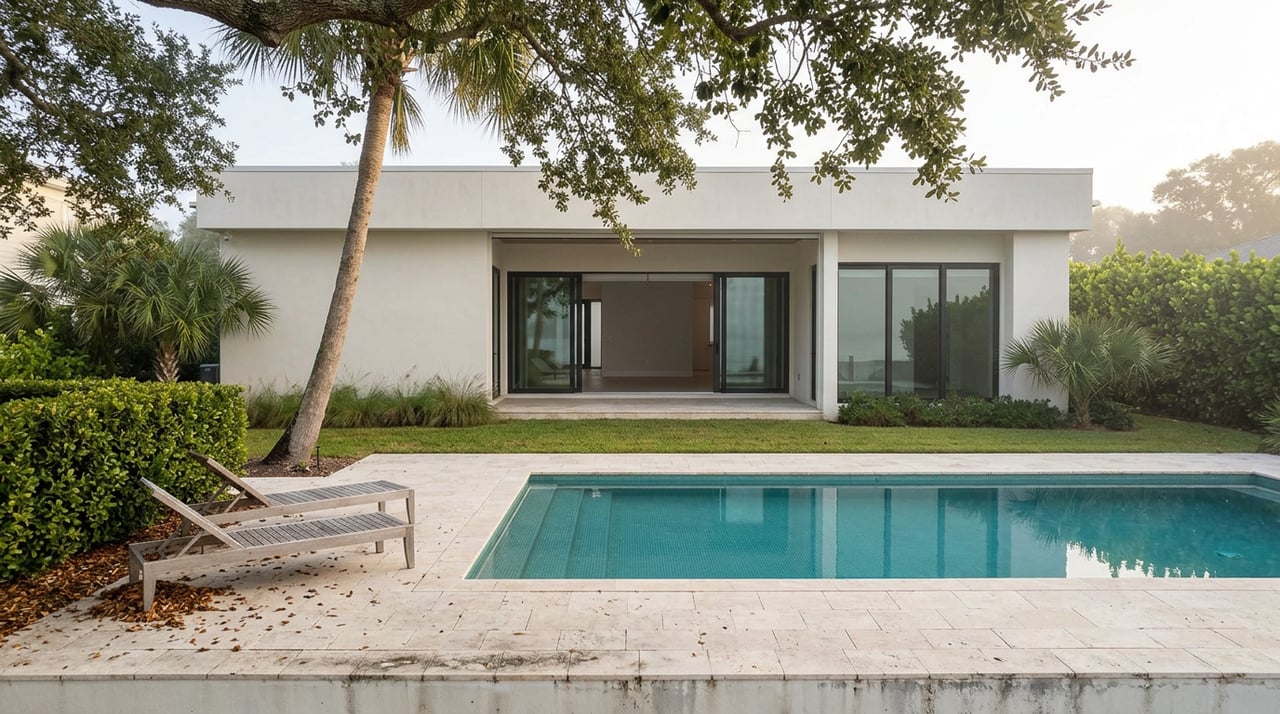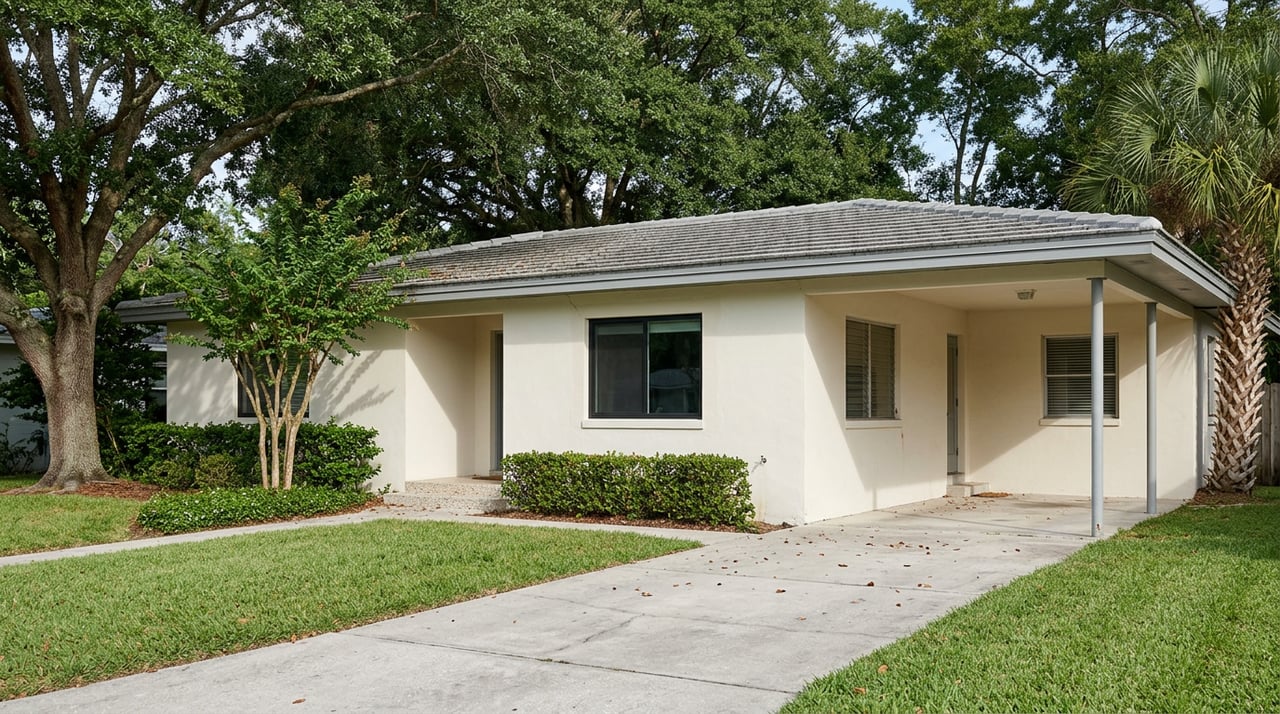
Two buyers can look at the same block in Paver Park, put offers on homes forty feet apart, and end up with completely different closings. One glides through in thirty days. The other stalls for three weeks and costs an extra five figures, not because the house was overpriced, but because of what a previous owner did to it without telling the city.
That is the part of buying in this neighborhood that rarely makes it into a listing description. Paver Park Estates was platted in 1950 as Sarasota's first postwar subdivision, and most of its original homes went up between 1952 and 1956. Seventy-plus years later, the neighborhood is not one thing. It is a patchwork of untouched ranches, quietly remodeled ranches, and lots where the original house came down and a new one went up in its place. Sarasota Magazine has documented that teardown-and-rebuild pattern happening street by street. What that patchwork means for you as a buyer is that the real risk in a Paver Park purchase is not the price on the sign. It is the permit file, and it varies house to house in ways the price alone will never tell you.
What "Platted in 1950" Actually Means for Your Closing Timeline
A house built in 1954 has had more than seventy years to accumulate small changes. A window swapped out in the 1980s. A bathroom replumbed in the 1990s. A rewired circuit somewhere along the way. In Sarasota, any of that work that touched structure, electrical, plumbing, HVAC, or window and door openings required a permit under the building code in effect at the time, and it still does today under the current Florida Building Code.
The problem is that plenty of that work never got permitted. It doesn't announce itself at the open house. It surfaces during inspection, when your inspector flags wiring or plumbing that doesn't match anything in the county's permit history, or when your lender's underwriter asks for documentation that doesn't exist.
When that happens, you are not just negotiating price anymore. You are negotiating who pays to fix a paperwork problem, and that problem has a real dollar figure attached. Retro-permitting unpermitted work in Sarasota has run buyers and sellers anywhere from roughly $5,000 to $20,000, depending on what needs to be brought up to code and re-inspected, and it can add weeks to a closing that was supposed to be simple.
That is the friction that catches people off guard in a neighborhood like this one. Not the sale price. The gap between what was built and what was ever officially approved.
The "Potential Historic District" Label, and What It Doesn't Restrict Yet
If you've read anything about Paver Park before making an offer, you may have come across a phrase that sounds more restrictive than it is. The City of Sarasota's Historic Preservation Chapter lists Paver Park-Terrace Gardens as a potential historic district. Buyers sometimes assume that means a design review board is already looking over every renovation permit in the neighborhood. It does not.
"Potential" means the city has identified the area as having the kind of established, cohesive mid-century character that could qualify for formal historic designation someday. It is not the same as an enacted overlay with binding design review, which is what actually slows down or restricts what you can do to a house. Until and unless that changes, a Paver Park ranch does not come with historic-district renovation rules attached simply because of that listing.
What it does mean is worth paying attention to for a different reason: it is one more signal that this block has retained more of its original 1950s housing stock than blocks nearby, which affects the odds that any given house you're looking at still has decades-old, possibly undocumented, work hiding behind the drywall.
A kitchen remodel without a permit doesn't disappear when the sale closes. It just becomes the next owner's problem, and eventually, someone has to pay to make it official.
Before you assume you have a free hand to renovate exactly as you like, it is still worth confirming with the city that no designation process is currently underway on the specific block you're considering. Status can shift, and a "potential" label today does not guarantee the same status in five years.
Why the Same Price Band Hides Three Different Risk Profiles
This is the piece that a median price can't tell you. Because Paver Park has three distinct categories of housing sitting on the same streets, two homes listed within a few thousand dollars of each other can carry completely different diligence needs.
The untouched original. These are the homes closest to their 1952-1956 roots. Charming, often full of character, and the most likely to have decades of small unpermitted changes layered on top of the original construction. Your inspection here needs to work harder, and your offer should assume some possibility of retro-permitting costs before you get too attached to a number.
The quietly remodeled ranch. Someone has already updated the kitchen, the bathrooms, maybe the electrical panel. The question here isn't whether work was done. It's whether it was permitted and closed out properly. A remodel that was never signed off by an inspector carries the same exposure as an unpermitted original, just dressed up better.
The rebuild. A new home on an old Paver Park lot, priced closer to current construction costs. These carry less legacy risk by definition, but you still want to confirm every permit tied to the new build was closed, not just pulled.
The practical result: a buyer comparing three houses in Paver Park at similar price points is not actually comparing three similar transactions. They're comparing three different diligence timelines, and the listing price won't tell you which one you're walking into.
Three Questions to Ask Before You Write an Offer
- Has any permit ever been pulled on this address, and were the permits closed out with a final inspection, not just opened and abandoned?
- Is this specific parcel currently part of any active historic designation process, as opposed to the general "potential district" listing that covers the wider area?
- If the seller or a prior owner did work themselves, can they produce documentation, or is this a case where an owner-builder disclosure should have been filed and wasn't?
These aren't questions your real estate agent should leave to a home inspector alone. A permit history pull and a straight conversation with the seller about what's been done to the house, permitted or not, belongs in your due diligence from the first walkthrough, not after you're already under contract.
What This Means If You're Already Under Contract
If you're past the offer stage and into inspection on a Paver Park home right now, the move is simple: ask for the permit history before you ask for repair credits. Repair negotiations assume you know what's actually wrong. If part of what's wrong is that the work was never inspected in the first place, the repair itself is only half the problem. The other half is getting the city to sign off on it retroactively, and that process has its own timeline that doesn't bend to your closing date.
Sellers who know their home's permit history is clean should say so upfront. It's a genuine selling point in a neighborhood where that history is uneven block to block. Sellers who aren't sure owe it to themselves to check before they get a surprise mid-transaction.
FAQ
Does buying in Paver Park mean I need historic-preservation approval before renovating? Not currently. Paver Park-Terrace Gardens is listed by the City of Sarasota as a potential historic district, which is a planning designation, not an enacted overlay with binding design review. Confirm the current status on your specific parcel before assuming either way, since that status can change.
How do I find out if past work on a house was permitted? Permit history is a public record. Before you get deep into a contract, request a pull of the property's permit file so you know what was approved, what was closed out with a final inspection, and what gaps exist. This is a conversation worth having with your agent at the showing stage, not after inspection.
Is a remodeled Paver Park home automatically a safer buy than an original ranch? Not automatically. A remodel is only as safe as its paperwork. An updated kitchen or rewired panel that was never permitted carries the same retro-permitting exposure as an untouched original with decades-old systems.
If you're weighing a specific Paver Park address and want a straight read on its permit history before you write an offer, or if you're the one selling a ranch home here and want to know what buyers' inspectors are likely to flag, Marlin Yoder works this neighborhood block by block. Get your instant home valuation or schedule a consultation before your next move here.