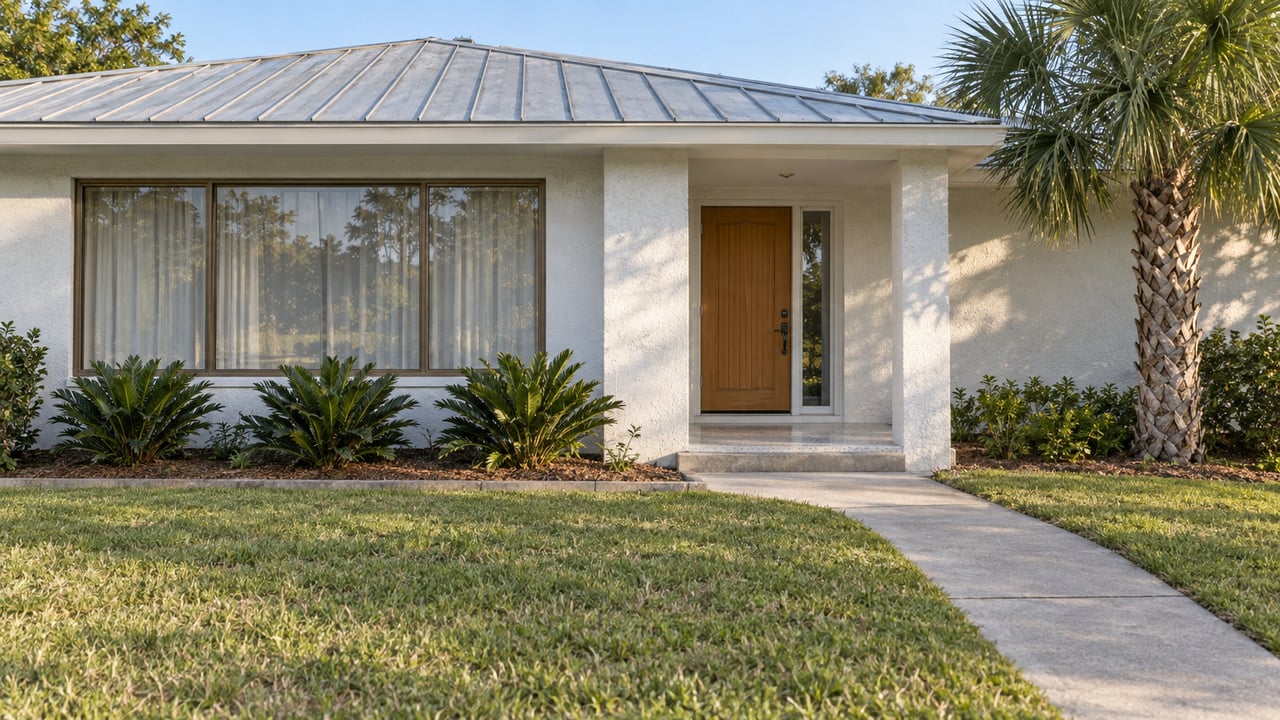
As Your Observer reported, in February 2021, five members of Sarasota's Historic Preservation Board voted unanimously against a demolition permit for a three-bedroom, 3,383-square-foot ranch house at 1701 Hashay Drive in McClellan Park. City staff had recommended approval, arguing the home was an unremarkable example of a common style. Preservation advocates argued the opposite: that the house was designed by Ralph Twitchell, the architect who helped found the Sarasota School of Architecture, and that losing it meant losing a piece of that history.
Two months later, on April 6, the City Commission overruled its own advisory board in a 4-1 vote and let the demolition proceed.
That sequence, staff recommendation, unanimous board rejection, commission override, is the part of West of Trail real estate that doesn't show up in a listing description. A house priced for its land value assumes you can act on that value. In parts of this corridor, whether you actually can depends on a determination made by people who don't work for the seller, the buyer, or the agent, and whose decision was later overruled by the City Commission in this case.
Why Teardown Math Works Here in the First Place
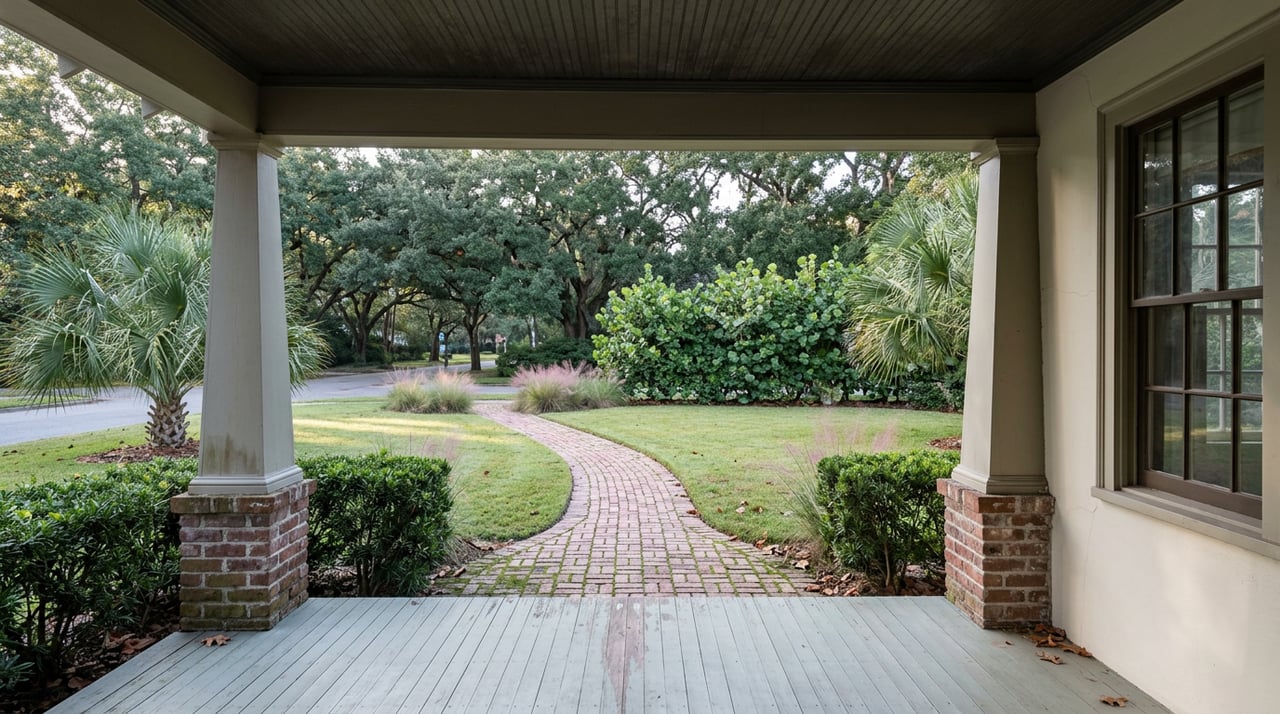
West of Trail's housing stock is old by Sarasota standards. Most of the single-family homes between US-41 and Sarasota Bay were built between the 1920s and the 1970s, and it's common to find a home built under Coolidge sitting next to a new custom build finished this year. That age gap is exactly why renovation and rebuild activity has stayed a normal part of the market here rather than an exception.
The economics currently support that activity. Sarasota County single-family homes closed at a median sale price of $492,450 in June 2026, up 8.2 percent from a year earlier, with months of supply tightening to 4.1 from 6.3 the year before, according to a housing market report published by NFM Lending using local MLS data. That's the seller-leaning side of a balanced market, which matters for teardown math specifically: when single-family inventory is tight and land in an established, walkable corridor is scarce, the calculation to demolish an aging structure and build new pencils out more often than it did when supply was looser.
None of that math changes whether the city will actually let you pull the permit. That's a separate question, and it's the one this piece is about.
Three Tiers of Address, Three Different Risk Profiles
Not every West of Trail address carries the same exposure. The city's own 2020 historic structures survey found that several mainland neighborhoods, including McClellan Park, Hudson Bayou, Granada, and Indian Beach/Sapphire Shores, contain enough historically consistent buildings to potentially qualify as National Register districts, even though most of them haven't been formally designated. Laurel Park is different: it's already Sarasota's largest residential district on the National Register, generally bounded by Morrill Street, Julia Place, Devonshire Lane, and Rawls Avenue, with most of its homes built between 1920 and 1957.
| Status | What it means in practice | Risk to a renovation or rebuild timeline |
|---|---|---|
| Flagged as a "potential" district, not yet designated (McClellan Park, Hudson Bayou, Granada, Indian Beach/Sapphire Shores) | The city has identified the area as historically consistent, but no formal protection is in place | Uncertain. |
| No historic flag on file | No survey history, no Master Site File listing | Lowest exposure, though a structure can still be flagged if new information surfaces |
The middle row is where the Hashay Drive and McClellan Park School cases both sit, and it's the row that catches buyers off guard, because "potential district" reads on paper like it means nothing.
The Waiver That Skipped the Board Entirely
The Hashay Drive house at least got a board vote, even though the commission later overturned it. The McClellan Park School site didn't get that far. As the Sarasota Alliance for Historic Preservation reported, City staff granted what's called an administrative waiver, which dismissed the Historic Preservation Board from reviewing the demolition request altogether. The waiver was based on a determination that the century-old school, tied to the McClellan sisters who developed the neighborhood, lacked historical significance. City staff later acknowledged that determination involved a clerical error. The demolition had already happened by the time that was sorted out.
As Sarasota Magazine reported, Erin DiFazio, president of the Sarasota Alliance for Historic Preservation, has pointed to a related pattern in how demolition approvals get justified: "Sometimes the only thing a developer needs is a letter from an engineer saying the building isn't structurally sound." That's not a rule anyone can rely on either way. It's a description of how the system has actually been used, and it means an engineer's letter carries real weight in these cases, for better or worse, depending on which side of the demolition request you're on.
A Newer Wrinkle: Easements That Outlive the Sale
Since 2023, the Sarasota Alliance for Historic Preservation has offered property owners a way to lock in protection permanently. Owners can apply for a conservation easement that bars demolition and protects a home's exterior features in perpetuity. It's a voluntary agreement between the owner and the nonprofit, not a city program, but once it's recorded, it becomes part of the chain of title. That means it survives the sale. A buyer who closes on a home with a recorded SAHP easement inherits the restriction along with the deed, regardless of what the listing said about renovation potential.
This is a detail worth checking before you write an offer on any older West of Trail property, not just ones in a flagged historic pocket, because the easement is attached to the parcel, not advertised in the MLS remarks.
What to Check Before You Assume Anything
Before treating an older West of Trail home as a straightforward teardown or a wide-open renovation canvas, a few checks are worth the time:
- Confirm whether the parcel or its immediate block appears in the city's historic structures survey findings, and whether that puts it in a flagged "potential district" area
- Check the Florida Master Site File for any existing entry on the structure
- Ask directly whether a Sarasota Alliance for Historic Preservation conservation easement has been recorded against the property
- If the plan involves demolition, budget time for the possibility of a Historic Preservation Board referral, not just a standard permit review
- If you're the seller and your home falls into that flagged middle tier, get ahead of the question rather than let a buyer's inspection period surface it
None of this means the answer will be no. The Hashay Drive case ended in an approved demolition. It means the answer isn't automatic, and finding out during a due diligence period rather than before you write the contract costs time you may not have.
FAQ
My street shows up in the city's 2020 survey as a "potential district." Does that mean my house is protected right now? Not automatically. Potential district status is a planning finding, not a certified protection.
Can the City Commission really overrule a unanimous preservation board vote? Yes. That's exactly what happened with the Hashay Drive house in April 2021, on a 4-1 vote.
If I buy a home with a recorded SAHP easement, am I bound by it even though I didn't sign it? Yes. The easement is recorded and becomes part of the chain of title, which means it binds future owners, not just the person who agreed to it.
If you're weighing a renovation or rebuild on one of these older West of Trail blocks, or thinking about listing one for sale, a conversation before you write the offer or sign a listing agreement is worth more than one after. Marlin Yoder works this corridor daily and can walk a specific address through what's actually on file before you commit to a plan. Get your instant home valuation or schedule a consultation to talk through what your address allows.
This article is general information, not legal, tax or financial advice. Consult a qualified professional about your situation.